OpenVPN vs Twingate: Which Business VPN is Better?
Protect every employee, everywhere with a robust solution that supports you with flexible pricing.
 The #1 Business VPN
Trusted by 20,000+ organizations for over two decades.



























Protect every employee, everywhere with a robust solution that supports you with flexible pricing.
The #1 Business VPNOpenVPN gives SMBs secure access, Zero Trust, and identity integration in a focused solution that's faster to deploy and easier to manage.
 | Twingate | |
|---|---|---|
| Zero Trust architecture |  Yes Yes | Yes |
| Simplified user experience | Yes | Yes |
| Scalable | Yes | Yes |
| Cloud-native | Yes | Yes |
| Can hide SaaS apps online | Yes | Yes |
| Client installation not required | Yes |  No No |
| Build on open source | Yes | No |
| Customizable network topologies | Yes | No |
| Has traditional VPN functionality | Yes | No |









 SOC 2 Type 2
 ISO/IEC 27001:2022
 HIPAA Compliant
 GDPR Compliant
Self-hosted or cloud-delivered: We've got your network security covered.
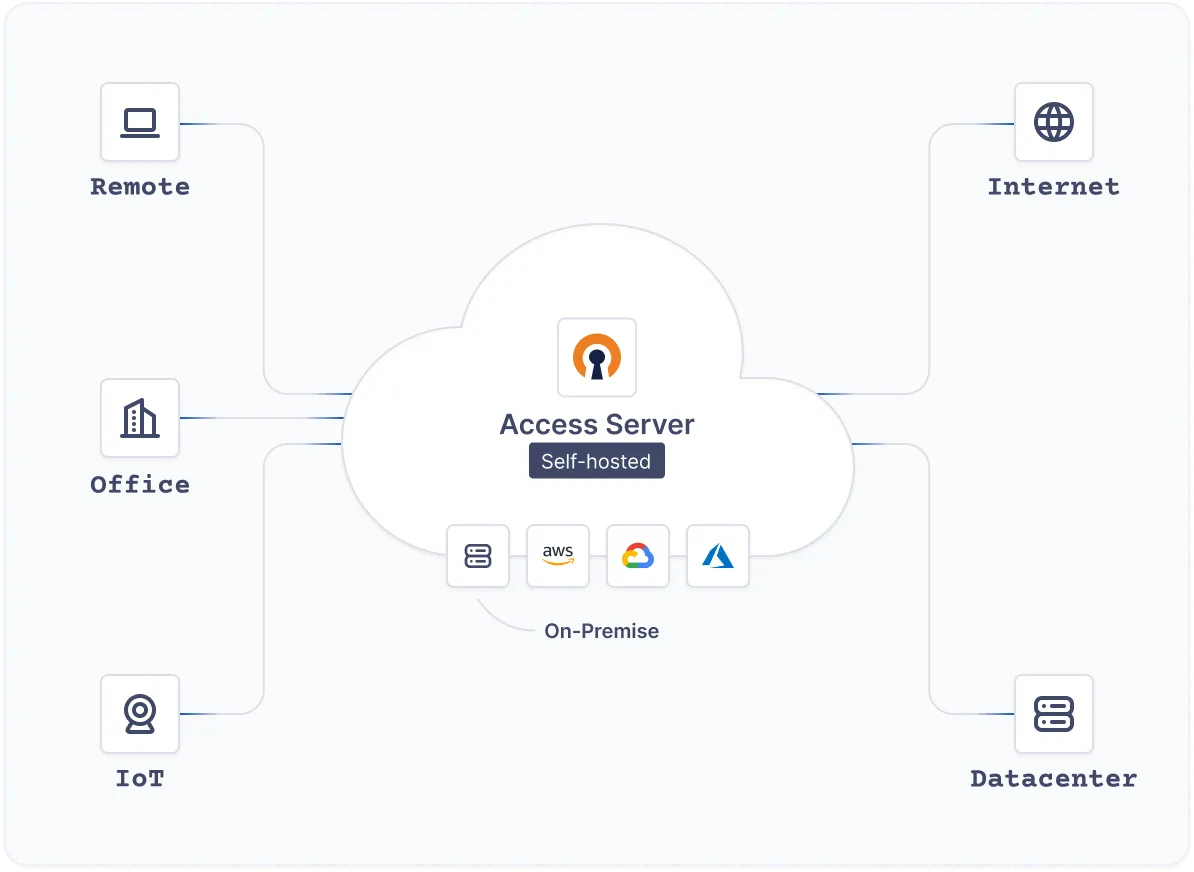
Access Server gives you complete control over your security architecture with customizable access policies and private tunneling.
 Deploy on IaaS providers, Docker, Linux, Hyper-V, and VMware ESXiGet started fast with a ready-to-use templatesProtect your data by routing internet traffic through the Access ServerEnforce access policies with identity, device, and IP verification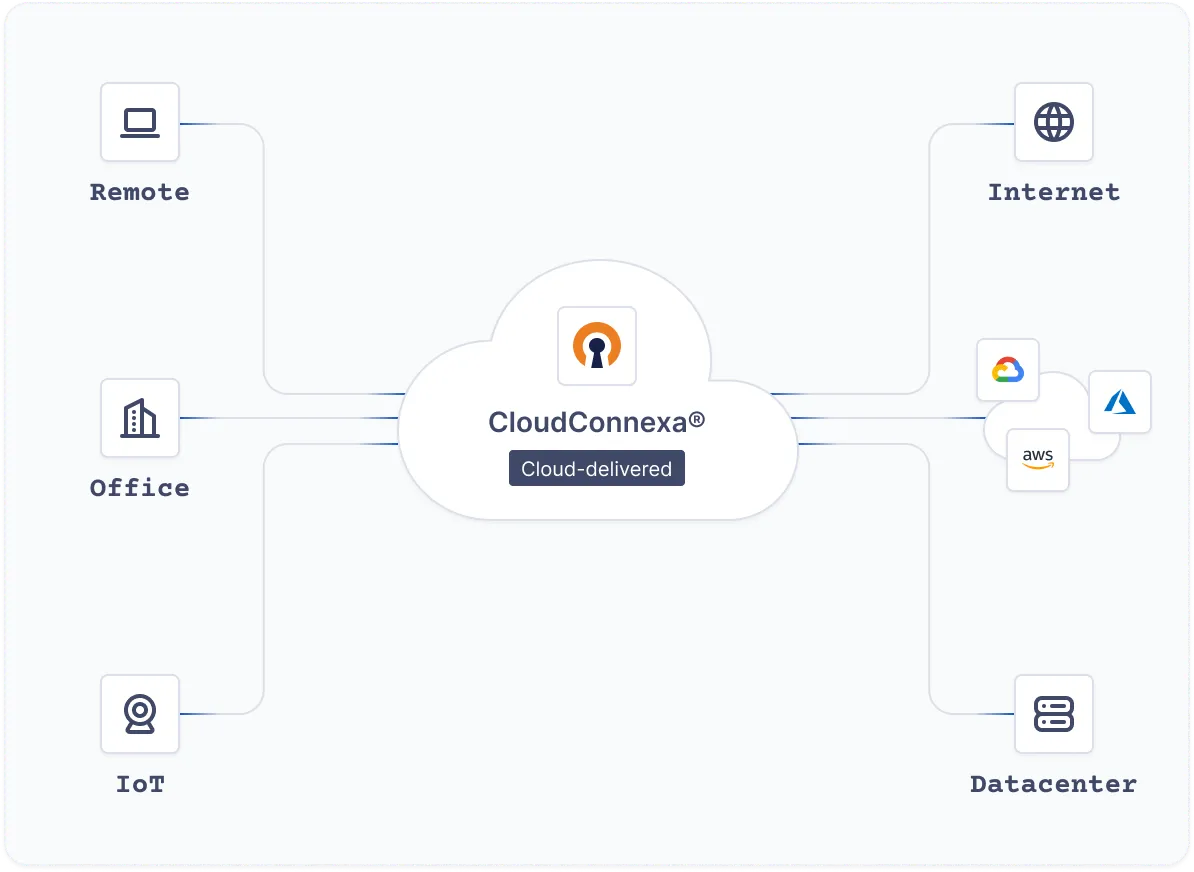
Connect your applications, private networks, workforce, and IoT devices — without complex, hard-to-scale hardware or self-managed server software.
Enforce security with a full suite of Zero Trust controlsConnect networks seamlessly using OpenVPN or IPsecEnhance protection with content filtering and IDS/IPSSimplify routing with domain-based traffic rules


Easy to configure options, add users, and that it has two factor authentication built in. You can configure the system to allow connections on common ports so that you're able to connect from pretty much anywhere in the world.

Configuring and updating my own server is super simple. In my experience, I've always had some difficulty setting up hardware VPN appliances, but OpenVPN was no-nonsense.

The OpenVPN Access Server AMI is a great out of the box VPN solution for your AWS VPC...

OpenVPN offers users a very simple and secure VPN option that is both economical and quick to install. Users are able to easily install it on their client devices.

The availability of client software for all operating systems and mobile devices means my customers can connect regardless of their setup.

Excellent, flexible solution for our Azure environment.